


What’s the Old House Worth? Valuing Improvements on Redevelopment Sites
- Dan Wilson
- Aug 12, 2025
- 4 min read
When the Land Is the Star But the House Is Still There...
We recently inspected a re-zoned 0.4-acre property slated for a 16-unit residential development. Sitting on it? A 1950s-era, 3-bedroom, 1-bath home. Livable. Rentable. But clearly not the long-term plan.
However, the client wanted to know what was the value of the improvements. With changing market conditions and despite successful rezoning, the client was considering deferring the development until market conditions improve.
Hence the question - what is the old home worth?
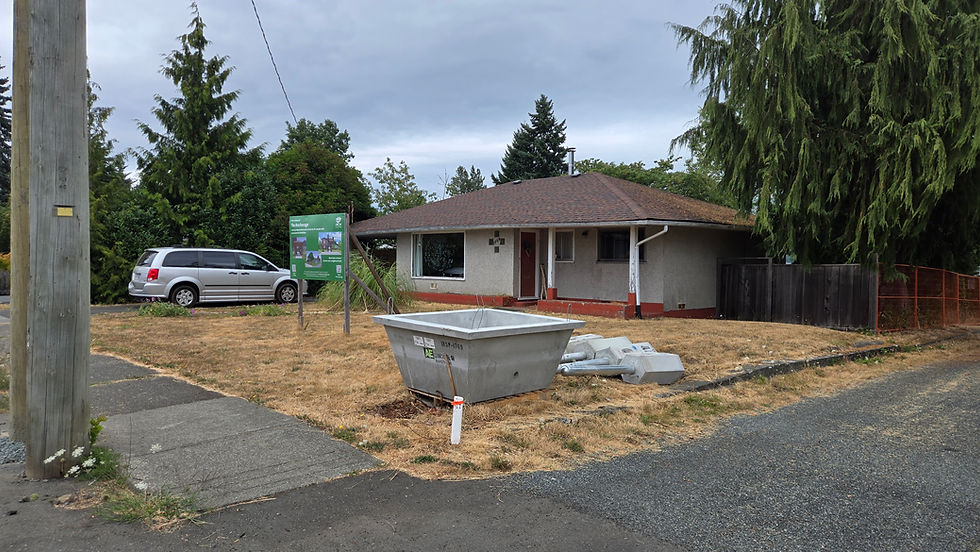
What’s the existing house actually worth in a redevelopment context?
In our appraisal, the client asked for two values one including the home, and one land-only. This isn’t uncommon. When a site is re-zoned, the land typically takes centre stage but ignoring the interim value of existing improvements can leave money (or risk) on the table.
Why the Value of Existing Improvements Still Matters
Developers want to know if the structure can offset holding costs (taxes, interest, soft costs) during the planning stage.
Lenders assess whether rental income justifies the carrying risk.
Sellers and buyers want clarity when negotiating price is that home worth anything, or a liability?
How Appraisers Value Improvements on Redevelopment Land
1. Depreciated Cost Approach
We estimate what it would cost to rebuild the structure today, then deduct for physical depreciation (age, condition) and functional obsolescence. For a 1950s home with limited updating, this often results in a very low residual value but it still establishes a floor.
The difficulty comes in measuring the depreciation. The home could function for 20 + more years, however the land value has risen to point that it is no longer the highest and best use - so there is external depreciation impacting on the value of the home in addition to the physical deterioration and functional obsolescence.
2. Income Approach (Interim Use)
If the house can be rented before development, we can estimate market rent and deduct for operating costs (taxes, insurance, repairs). We then discount the net income to present value over the anticipated holding period say, 1–3 (or more) years.
Even modest rents can help cover carrying costs - especially in markets with housing shortages.
3. Direct Comparison Approach
Here we look at comparable sales where existing homes were rentable but redevelopment was the highest and best use. Are buyers willing to pay slightly more for sites with temporary income potential or is it a wash when factoring in the demolition costs? This type of analysis supports or adjusts our contributory value conclusion.
4. Demolition or Removal Cost Deduction
Demolishing an old home isn’t free - disposal, permits, hazardous materials, utility disconnections, and site prep all impact on the cost. We rarely see demolition costs less than $10,000 and they can easily reach $25,000–$50,000+. This amount must be subtracted from overall value.
In rare cases, companies like Nickel Bros may relocate the home but this depends on the structure’s quality, ease of relocation and overall market demand.
in other cases and in certain municipalities, there are incentives offered for a green demolition - or a piece by piece demolition wherein the components that can be recycled are set aside for future reuse. This can lower the demolition costs.
When the House Becomes a Liability
Not every structure adds value. In some cases:
The condition is poor enough to deter lenders or insurers.
Hazardous materials or aging services complicate demolition.
The structure reduces marketability.
Removal costs exceed the present value of the income.
Here, the appraiser may conclude the home contributes negative value.
Not All Redevelopment Is Immediate
One key misconception? That rezoning = shovel-ready.
Permits, servicing, financing, pre-sales all take time.
Market conditions change during the course of municipal approvals.
What seemed imminent is now a longer horizon.
In the interim, a modest home can serve as a bridge asset - especially in high-demand rental markets. It may not add long-term value, but it buys time and offsets costs.
That’s where interim use analysis becomes critical.
Real-World Example (Anonymized)
In a recent appraisal, a re-zoned lot included a 1960s-era house in average condition. We estimated:
Depreciated cost: ~$30,000 (factoring in all forms of depreciation)
Rental income: $2,500/month over 12 months (Net income of ±$20,000/year - after deductions for property taxes, insurance, and other expenses)
Demolition cost: ~$20,000
Our final analysis showed that for the home to have a positive value, the holding period had to be greater than 1 year. At a 2 year hold, the present value of the income less the demolition/removal costs was approximately $18,000. At a one year hold, the improvements had $0 value. (note: financing costs excluded from the analysis).
Other Factors We Consider
Heritage/character designation or local demolition restrictions
Utility disconnect/reconnect costs
Insurance limitations on dated systems
Local rent control or tenancy risks
Zoning approval uncertainty or market timing
All these can influence how a temporary structure impacts value.
Closing Thought
Valuing a redevelopment site isn’t just about the land. It’s about what happens before the land is ready and whether the existing improvements help or hinder the process.
So, like much in the valuation world, the short answer to the question is 'it depends'
Whether you're a builder, property owner, or lender, understanding how these moving parts work together can inform better decisions.
Have a site like this?
We love unpacking complex valuation problems.
Let’s talk strategy.


Comments